Glass Curtain Walls
Remote cleaning for glass curtain-wall systems on commercial and high-rise buildings where conventional access can be complex.
Agriculture · Cleaning · Cargo · Consumer UAV Solutions
AeroSightX facade cleaning drones support remote cleaning of glass curtain walls, commercial buildings and other hard-to-access exterior surfaces. Configure the UAV platform, cleaning system, water supply and hose setup around building height, facade geometry and site conditions.
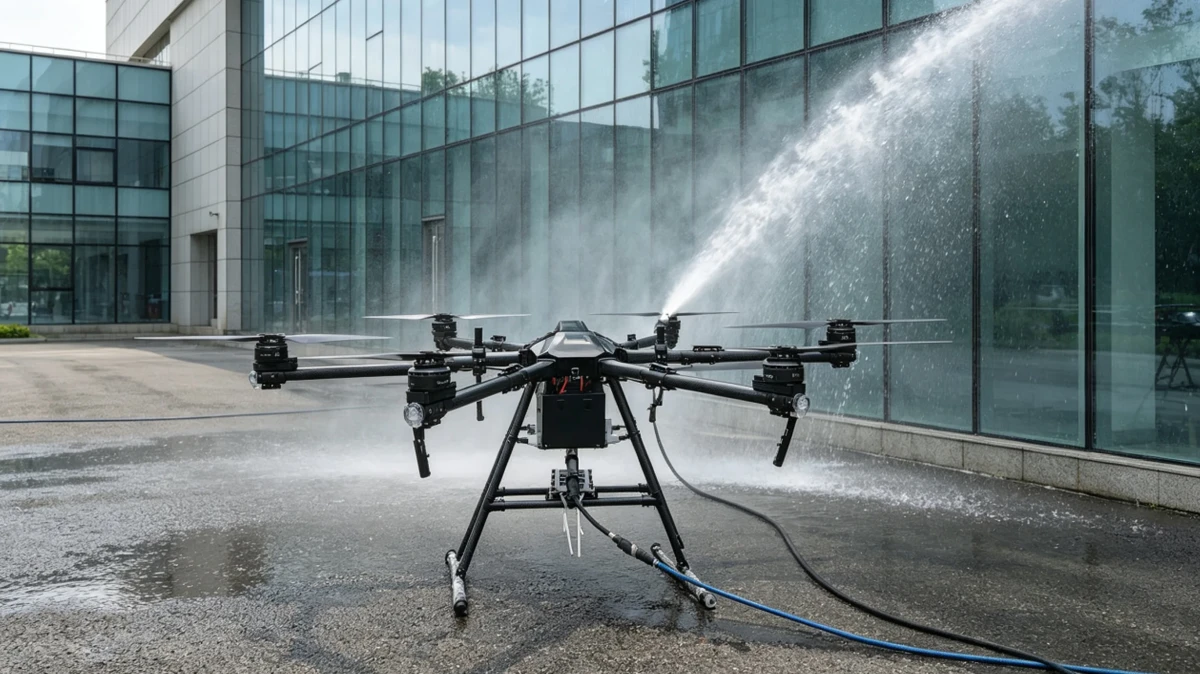
Facade cleaning applications
Drone facade cleaning is planned around the building and its accessible exterior surfaces—not a single configuration for every site.
Remote cleaning for glass curtain-wall systems on commercial and high-rise buildings where conventional access can be complex.
Cleaning workflows for offices, hotels, shopping centers and other commercial exterior surfaces.
Aerial access for selected exterior walls, structures and hard-to-reach industrial surfaces.
Configurable cleaning solutions for suitable stadiums, exhibition facilities and other large exterior structures.
Configuration constraints
Resolve access, hose drag, pressure loss and overspray before selecting the aircraft and ground system.
Working height affects hose length, pressure requirements and operational planning.
Glass, coated surfaces and other exterior materials may require different cleaning methods and pressure settings.
Define the available water source, pump arrangement and required delivery method before selecting the cleaning configuration.
Hose length, drag, routing and ground-equipment position affect aerial cleaning operations.
Building geometry, wind exposure, surrounding obstacles and pedestrian areas should be evaluated before operation.
Define the target surface condition, cleaning method and expected result before configuring the UAV and cleaning system.
From site assessment to review
Plan the complete building-cleaning system before the UAV approaches the facade.
Review building height, facade material, geometry and site restrictions.
Match the drone, cleaning module, pump, hose and nozzle to the project.
The UAV approaches the facade while maintaining the required working distance.
Water or the approved cleaning medium is delivered through the configured cleaning system.
The UAV moves across the next facade section according to the operating plan.
Review the cleaned area and determine whether additional passes or adjustments are required.
Primary facade platform

A 30 kg payload six-rotor platform designed for integrating facade-cleaning equipment across glass curtain walls, commercial buildings and industrial exterior surfaces.
Compare the wider Cleaning Drones range, or discuss mission-specific integration through Custom Cleaning Drone Development.
Building environment planning
Drone facade cleaning requires coordinated aerial and ground operations. Evaluate access restrictions and local requirements before deployment.
Define controlled ground areas around the cleaning operation.
Review local wind and building-related airflow before each operation.
Maintain an appropriate working distance according to the UAV, cleaning equipment and target surface.
Plan hose routing, pump placement and ground support to reduce interference with the aircraft.
Review water supply, cleaning media and runoff requirements according to the site and local operating procedures.
Related cleaning application
For rooftop and ground-mounted PV cleaning, explore AeroSightX solar cleaning configurations including the HV50 and XJ-50C.
Frequently Asked Questions
Review building access, water delivery and configuration requirements before planning a facade-cleaning mission.
View More FAQs →A facade cleaning drone is a UAV configured with cleaning equipment for remote operation around building exteriors. Depending on the project, the system can combine the aircraft with a cleaning module, water supply, pump, hose and nozzle configuration.
Yes, suitably configured cleaning drones can support remote cleaning of glass curtain walls and other compatible exterior surfaces. The final setup should be selected according to facade material, building geometry, working height, water supply and site conditions.
Drone-based cleaning can be considered for suitable high-rise facade projects, but building height alone does not determine feasibility. Wind exposure, facade geometry, surrounding obstacles, hose routing, ground safety and local operating requirements should all be evaluated before deployment.
Water can be delivered through a project-specific cleaning system depending on the UAV and site configuration. Ground-connected hose, pump and water-supply arrangements should be planned around working height, pressure requirements, hose drag and available ground access.
Key factors include facade material, building height and geometry, water supply, cleaning pressure, hose routing, wind conditions, obstacles, pedestrian exclusion areas and local UAV operating requirements.
The cost of a window or facade cleaning drone depends on the aircraft platform, payload, cleaning equipment, pump and water-delivery system, control configuration, accessories, customization and order quantity. For a more detailed breakdown, see the Window Cleaning Drone Cost Guide.
Share the building height, facade material, geometry, water source, ground access, site restrictions and expected quantity. We can review the suitable UAV, cleaning payload and ground-system configuration.
Building Height · Facade Material · Water Supply · Site Conditions · Quantity
Request a Facade Cleaning ReviewWe use necessary cookies to operate this site and optional cookies to improve your experience.