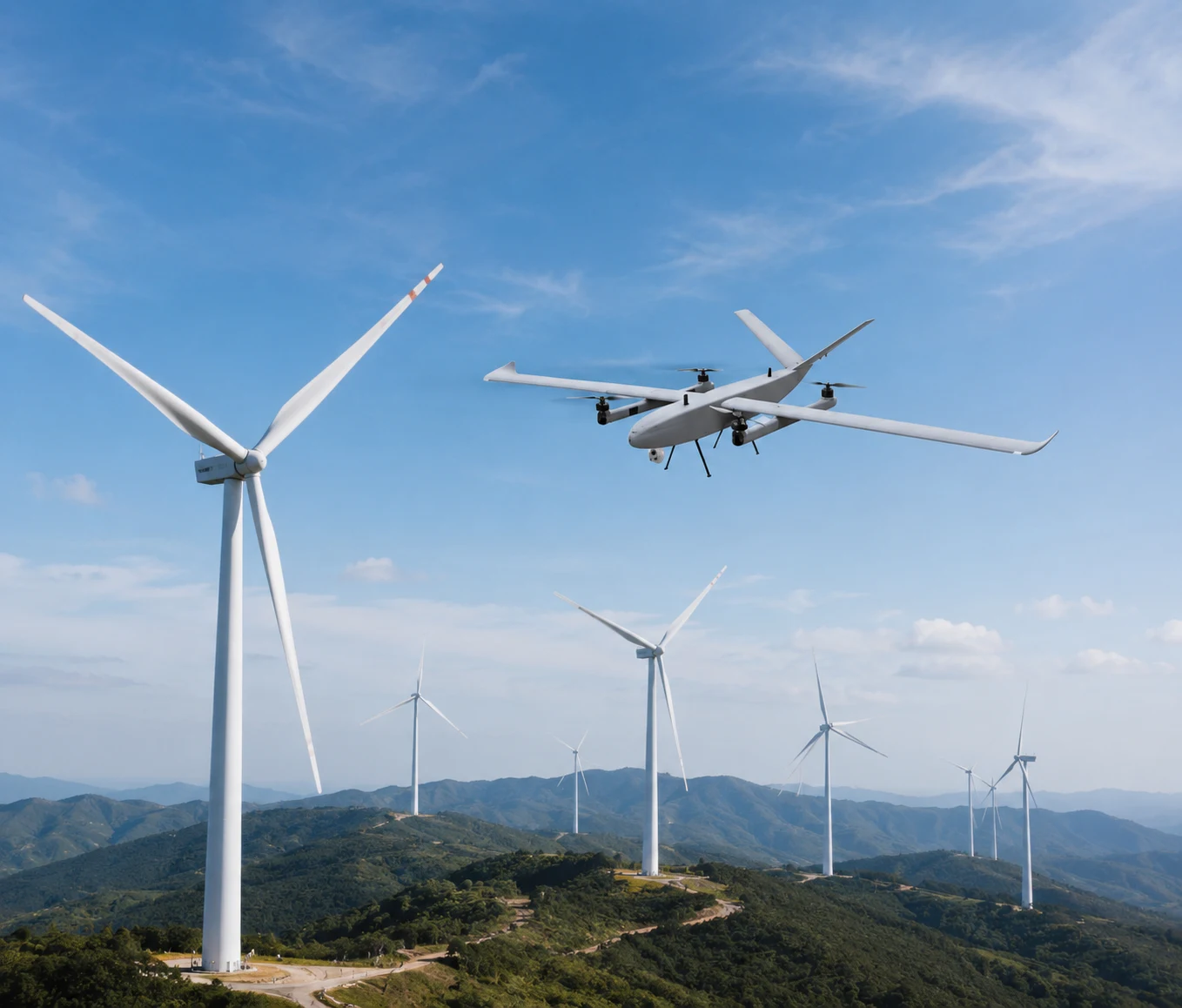
Visible damage is a starting point. High-resolution images can document erosion, surface cracks and coating loss. Internal condition and repair decisions require the appropriate specialist assessment.
Wind turbines operate in demanding environments where strong winds, rain, dust, temperature changes, and airborne particles can gradually affect their external components.
For wind farm operators, maintaining the condition of turbine blades, towers, nacelles, and other structural components is essential for reliable asset operation.
However, inspecting a wind turbine is not straightforward. Modern turbines feature large blades positioned high above the ground, making detailed inspection difficult without specialized equipment and trained personnel.
Wind turbine drone inspection provides an alternative approach to collecting visual condition data from these hard-to-reach structures.
Using UAVs equipped with high-resolution cameras, zoom lenses, and stabilized gimbals, inspection teams can document blade surfaces, identify visible abnormalities, and create organized inspection records for maintenance planning.
This article explores how wind turbine inspection drones work, what types of blade damage they can help identify, and how to select a suitable UAV platform for professional wind farm inspections.
1. What Is Wind Turbine Drone Inspection?
Wind turbine drone inspection is the use of unmanned aerial vehicles (UAVs) to capture detailed images and condition data from wind turbine components.
Instead of relying entirely on rope-access technicians, ground-based cameras, or other traditional inspection methods, operators can use drones to collect aerial imagery from suitable positions around the turbine.
A typical drone inspection may cover:
- Rotor blade surfaces
- Leading and trailing edges
- Blade tips
- Blade roots
- Hub exterior
- Nacelle housing
- Tower exterior
- Visible external fittings
The collected images can then be reviewed to identify possible surface damage, structural abnormalities, or areas requiring closer examination.
UAV inspection is primarily a data-collection method. It does not automatically confirm the internal structural condition of composite blades, and suspected damage may require additional engineering evaluation.
2. Why Is Wind Turbine Blade Inspection Important?
Rotor blades are exposed to repeated mechanical loading and environmental stresses throughout their operating life.
Over time, their surfaces can develop visible deterioration that may affect aerodynamic performance or indicate the need for maintenance.
Regular inspections help wind farm operators establish a record of blade condition and identify changes before they develop into more serious maintenance concerns.
Leading Edge Erosion
The leading edge is the front edge of a blade that first encounters airflow during rotation.
Rain, airborne particles, and other environmental exposure can gradually wear away protective surface coatings.
Visible leading edge erosion may appear as:
- Roughened surface areas
- Coating loss
- Surface pitting
- Localized material deterioration
Severe leading edge erosion can affect aerodynamic efficiency, making early documentation valuable for maintenance planning.
Surface Cracks
Cracks may develop in coatings or composite structures due to mechanical loading, fatigue, impact, or manufacturing-related factors.
A high-resolution camera can help document visible cracking and its location.
However, visual images alone cannot reliably determine crack depth or the condition of internal composite layers.
Lightning-Related Damage
Wind turbines are exposed to lightning, and blades incorporate lightning protection systems.
Following a suspected lightning event, visual inspection may reveal burn marks, surface damage, or other abnormalities.
Aerial photographs can assist with documentation, but electrical continuity and internal damage assessments require appropriate specialized inspection methods.
Coating and Surface Defects
Blade surfaces may develop peeling coatings, discoloration, surface wear, or localized damage.
Drone imagery can provide visual records that help maintenance teams track whether these conditions change over successive inspections.
3. What Blade Defects Can Inspection Drones Identify?
The ability to identify a defect depends on image resolution, lighting, camera angle, viewing distance, and the physical characteristics of the damage.
| Blade Condition | Visible Indicators | UAV Inspection Capability |
|---|---|---|
| Leading edge erosion | Surface wear, coating loss, pitting | Visual identification and documentation |
| Surface cracks | Visible lines or fractures | High-resolution image screening |
| Lightning damage | Burn marks, localized surface damage | External damage documentation |
| Coating degradation | Peeling, discoloration, surface deterioration | Visual condition monitoring |
| Trailing edge damage | Visible separation or irregularities | Detailed imaging from suitable viewpoints |
| Surface contamination | Dirt, deposits, foreign materials | Visual observation |
| Internal composite defects | May have no external indication | Usually requires additional inspection methods |
An important distinction is that drone imagery can identify visible signs of damage without necessarily establishing the underlying cause or structural severity.
For example, a discolored area may indicate surface deterioration, but determining whether the blade requires repair involves additional technical assessment.
This is why inspection image quality and consistent documentation are essential.
4. How Does a Drone Inspect Wind Turbine Blades?
A professional wind turbine inspection follows a structured process designed around the turbine geometry, required image detail, and site conditions.
Step 1: Identify the Inspection Requirements
Before selecting an aircraft, define which turbine components must be documented.
The inspection scope may include:
- Complete blade surface coverage
- Leading edge examination
- Trailing edge inspection
- Blade root and tip imaging
- Hub and nacelle documentation
- Tower exterior assessment
The required image detail should also be specified.
Step 2: Review the Turbine and Site
Important planning information includes:
- Turbine height
- Blade length
- Number of turbines
- Turbine layout
- Surrounding terrain
- Wind conditions
- Available takeoff and landing areas
- Site operating restrictions
Large wind farms may require a different deployment approach from a single-turbine inspection.
Step 3: Establish Safe Inspection Conditions
Detailed blade inspection is often performed with the rotor stopped and secured under the wind farm operator's approved procedures.
The inspection team must coordinate with authorized site personnel and follow applicable turbine shutdown, rotor-locking, electrical safety, and aviation requirements.
Wind speed, turbulence, visibility, and communication conditions should be checked before flight.
The aircraft must maintain an appropriate distance from turbine structures.
Step 4: Capture Blade Images
The drone captures images of selected blade surfaces using a planned inspection sequence.
Important considerations include:
- Camera angle
- Stand-off distance
- Image resolution
- Gimbal stabilization
- Lighting
- Surface coverage
- Overlap between images
Consistent viewpoints make it easier to compare conditions during future inspections.
Step 5: Organize Inspection Data
Images should be associated with the correct turbine and blade.
A structured record may include:
- Turbine identification
- Blade identification
- Surface location
- Inspection date
- Image reference
- Visible observations
- Follow-up recommendations
This creates a more useful maintenance record than a collection of unorganized photographs.
Step 6: Review and Plan Maintenance
Qualified personnel review the imagery, classify observations according to the applicable inspection procedure, and determine whether further examination or repair is required.
The final report can support future inspection scheduling and maintenance planning.
5. What Camera Is Best for Wind Turbine Drone Inspection?
Selecting the right camera is one of the most important decisions in a wind turbine inspection project.
High-Resolution RGB Cameras
Visible-light cameras are commonly used to document:
- Surface erosion
- Coating damage
- Visible cracking
- Blade edge abnormalities
- External structural conditions
Image detail is especially important when identifying small surface features.
Optical Zoom Cameras
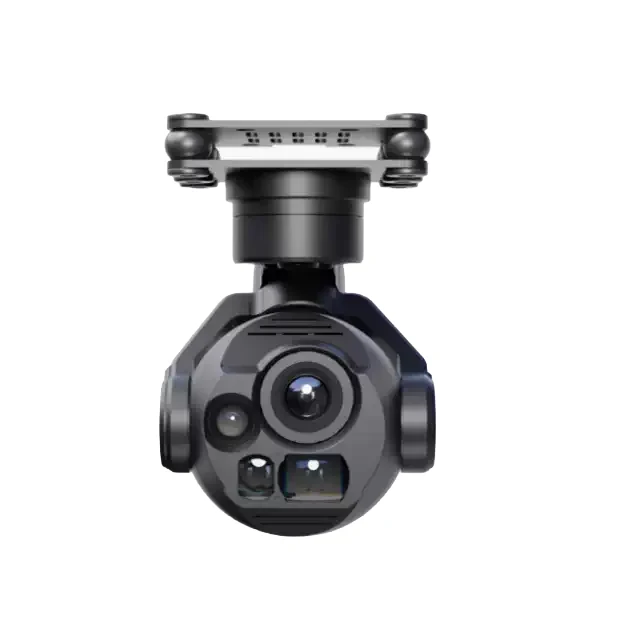
Optical zoom allows the operator to capture more detailed views of selected components without necessarily moving the aircraft closer.
This can be useful when inspecting blade surfaces, hubs, or external fittings from an appropriate distance.
However, zoom performance should be evaluated together with image stability, lighting, and actual image quality.
Stabilized Gimbal Cameras
Wind turbine inspection requires careful camera positioning around tall structures.
A stabilized gimbal helps maintain image orientation and reduce unwanted camera movement.
Thermal Cameras
Thermal cameras measure apparent surface temperature patterns.
Although thermal imaging can support certain wind turbine inspection applications, it should not be treated as a universal method for detecting blade cracks or internal composite damage.
Thermal inspection usefulness depends on the defect type, environmental conditions, inspection method, and sensor capability.
For routine external blade condition documentation, high-resolution visible-light imaging is often the primary requirement.
6. How to Choose a Wind Turbine Inspection Drone
Not every commercial UAV is suitable for professional turbine inspection.
The aircraft should be evaluated according to the mission rather than headline specifications alone.
Hovering Stability
Detailed blade imaging often requires the aircraft to hold a controlled position near a tall structure.
Stable hovering and precise maneuverability are therefore important.
Wind Resistance
Wind turbines are installed in locations selected for their wind resources.
However, wind farm conditions can make drone operations challenging.
Inspectors should evaluate the aircraft's approved wind limits, site turbulence, gust conditions, and safe flight procedures.
No drone should be assumed capable of operating safely simply because it is marketed for industrial use.
Flight Endurance
Inspection missions may require multiple viewpoints and repeated image capture.
Useful endurance depends on payload weight, weather, flight route, and required battery reserves.
Camera Compatibility
The aircraft should support a camera system capable of collecting the required level of image detail.
Check payload weight, mounting compatibility, gimbal stability, and camera-control integration.
Flight Safety Functions
Important features may include:
- Low-battery alerts
- Return-to-home functions
- Positioning systems
- Communication monitoring
- Flight-route management
- Emergency procedures
These functions support flight operations but do not replace site-specific risk management.
7. AeroSightX UAV Platforms for Wind Turbine Inspection
AeroSightX offers industrial UAV platforms that can be evaluated for wind turbine inspection and related wind farm monitoring applications.
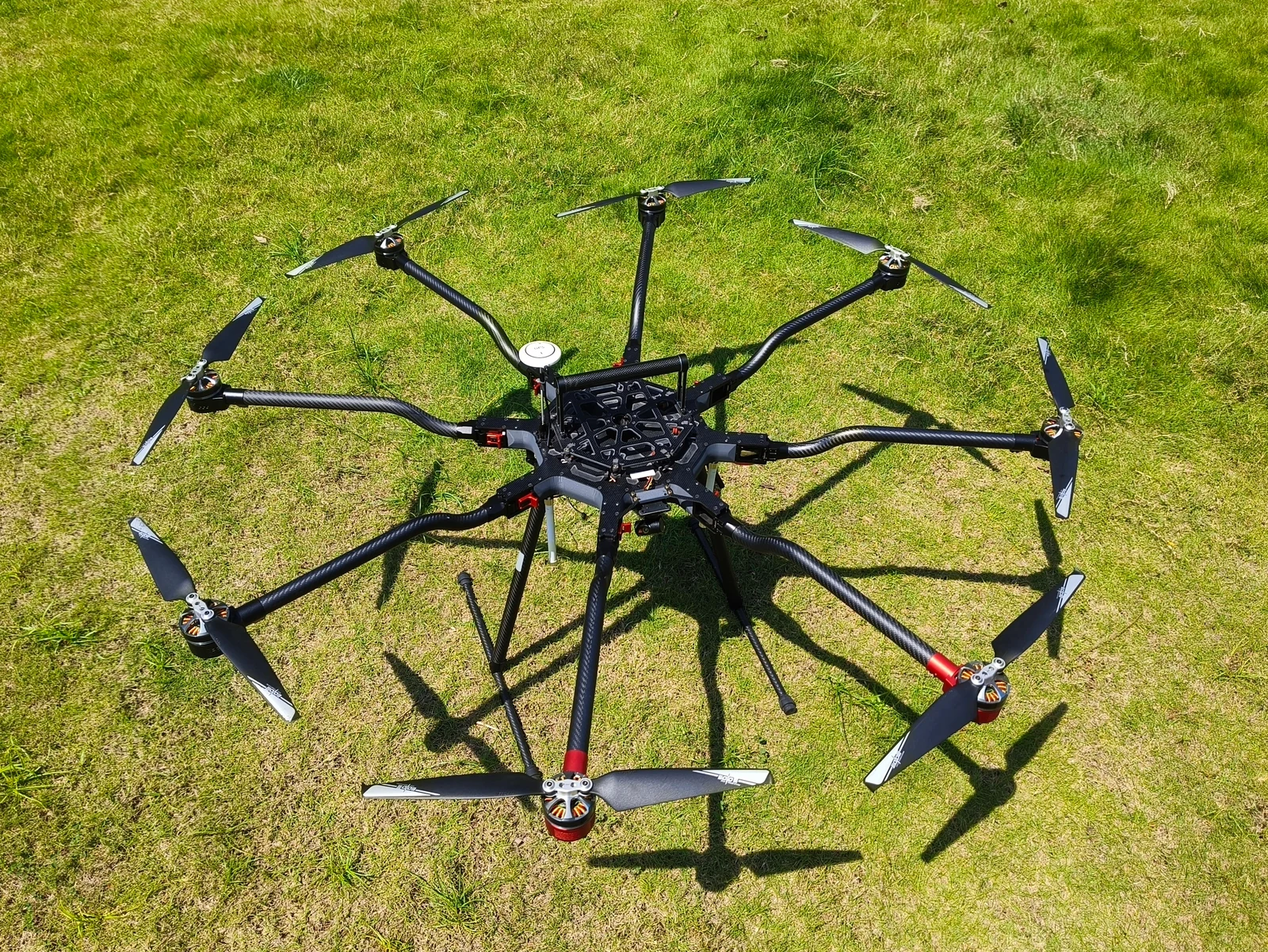
XJ-8A Multi-Mission UAV
The XJ-8A Multi-Mission UAV is an eight-rotor industrial drone designed for professional imaging and inspection missions.
Key specifications include:
- Eight-rotor configuration
- Maximum payload: 5 kg
- Loaded hover endurance: up to 40 minutes under specified test conditions
- GPS and BeiDou positioning
- Configurable visible-light, thermal, and multi-sensor payload options
Its payload flexibility and hovering capability make the XJ-8A a candidate for blade surface imaging and detailed external turbine inspection.
Actual operational suitability depends on site conditions, camera configuration, and the approved flight plan.
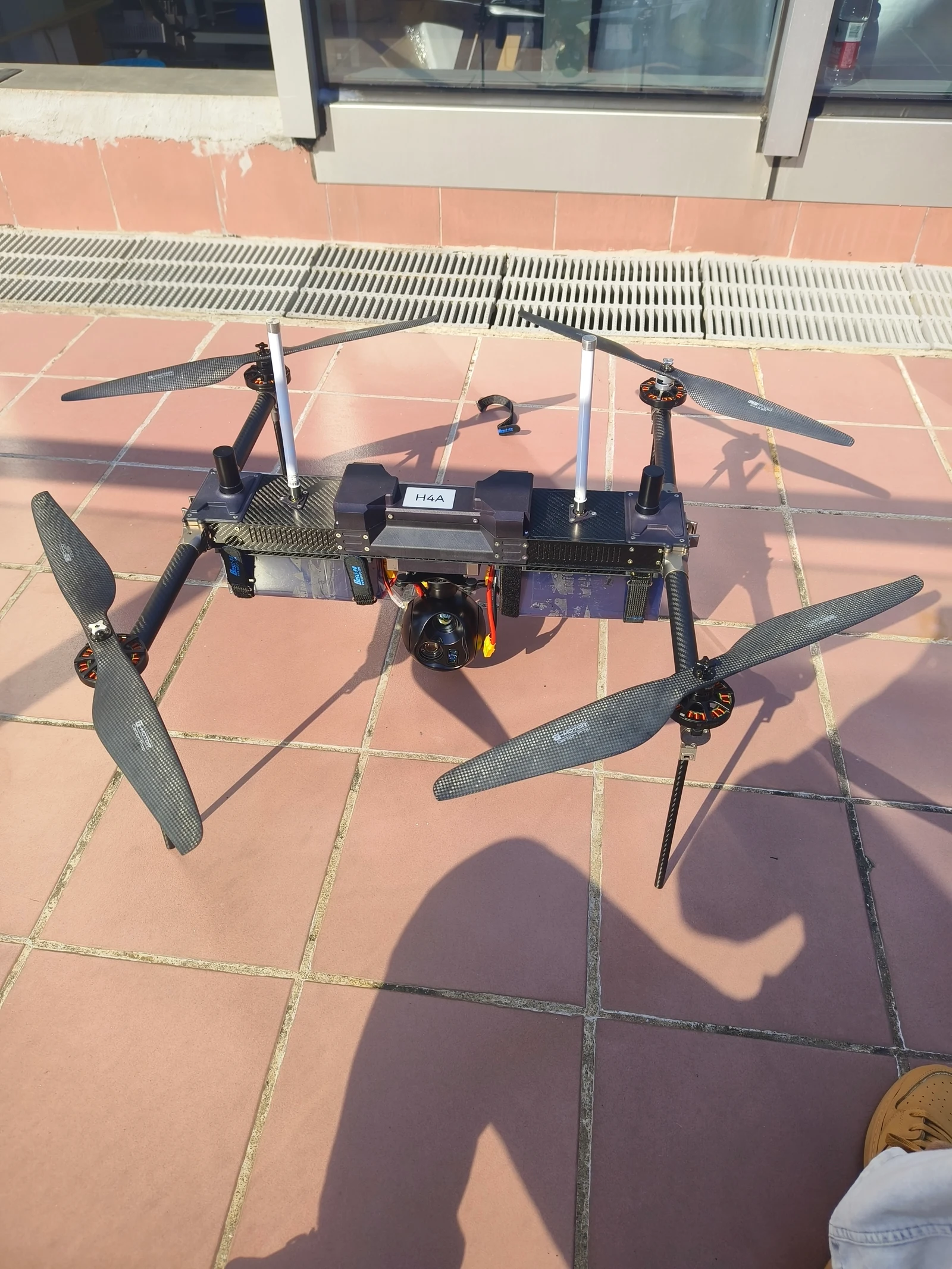
XJ-H4A Long-Endurance UAV
The XJ-H4A Long-Endurance UAV is a multi-rotor platform designed for longer inspection missions.
Key specifications include:
- Maximum payload: 1.5 kg
- Loaded endurance: up to 80 minutes under specified test conditions
- GPS and RTK positioning
- Modular imaging payload options
- Mission configuration subject to flight-control verification
The XJ-H4A may be evaluated for wind farm inspection workflows requiring extended flight time and repeatable camera positioning.
XJ-TR1 VTOL Fixed-Wing UAV
The XJ-TR1 VTOL Fixed-Wing UAV combines vertical takeoff with efficient fixed-wing flight.
It is better suited to broader wind farm reconnaissance, terrain observation, and extended site coverage than detailed hovering-based blade inspection.
For projects covering multiple wind farm assets, different UAV configurations may be used for different stages of the inspection program.
Explore our Wind Turbine Inspection Solutions for additional application information.
8. Drone Inspection vs. Traditional Wind Turbine Blade Inspection
Wind turbine inspection can involve several methods, each with different capabilities.
| Inspection Method | Main Advantages | Main Limitations |
|---|---|---|
| UAV visual inspection | Remote image capture, flexible viewpoints, organized records | Primarily external visual data; weather and flight restrictions |
| Rope-access inspection | Direct physical access, close examination, potential repair work | Requires specialized personnel and access procedures |
| Ground-based optical inspection | No aerial deployment required, useful initial screening | Viewing angle and image detail limitations |
| Specialized nondestructive testing | Can investigate selected internal or subsurface conditions | Equipment, access, and method-specific requirements |
UAVs are particularly useful for collecting external visual evidence.
However, they are not a complete substitute for rope-access work, direct measurements, repair activities, or specialized nondestructive testing.
An effective maintenance program may combine multiple inspection methods.
9. Wind Turbine Inspection Checklist for UAV Buyers
Before purchasing a wind turbine inspection drone or requesting a quotation, prepare the following information.
| Requirement | Information to Provide |
|---|---|
| Wind farm size | Number of turbines and site layout |
| Turbine dimensions | Tower height and approximate blade length |
| Inspection scope | Blades, leading edges, nacelle, hub, tower |
| Image requirements | General condition or detailed surface documentation |
| Camera payload | RGB, optical zoom, thermal, or combined sensors |
| Operating environment | Terrain, wind conditions, temperature |
| Flight requirements | Required endurance and expected inspection schedule |
| Deliverables | Images, location references, inspection records |
| Commercial requirements | Quantity, customization, destination market |
Providing these details helps the manufacturer evaluate aircraft and payload compatibility.
For OEM buyers and industrial UAV integrators, it also supports a more accurate configuration proposal.
10. Frequently Asked Questions About Wind Turbine Drone Inspection
Can drones detect cracks in wind turbine blades?
High-resolution drone images can reveal visible surface cracks under suitable conditions. However, drones cannot reliably determine crack depth or detect every internal composite defect through ordinary visual imaging.
How are wind turbine blades inspected by drones?
The turbine is prepared according to the site's approved safety procedure. A drone then captures images from planned viewpoints around the blade surfaces. Inspection specialists review the imagery and identify areas requiring further assessment.
What type of drone is best for wind turbine blade inspection?
Multi-rotor drones are generally suitable for detailed blade inspection because they can hover and position cameras around turbine structures. Camera quality, wind limits, and flight stability are important selection factors.
Can drones inspect offshore wind turbines?
Offshore wind turbine inspection is possible, but marine environments introduce additional challenges involving wind, salt exposure, launch and recovery, logistics, and aviation permissions. Aircraft suitability must be evaluated for the specific offshore operation.
Can wind turbine inspection drones operate in strong winds?
Every UAV has defined operating limitations. Strong winds and turbulence can affect safety and image quality. Operators must follow the aircraft's approved limitations and site-specific procedures.
How often should wind turbine blades be inspected?
Inspection frequency depends on the turbine manufacturer's recommendations, asset condition, environmental exposure, operating history, and the wind farm's maintenance program.
Is thermal imaging necessary for wind turbine inspection?
Not always. High-resolution RGB cameras are commonly used for external blade surface inspections. Thermal imaging may be useful for particular tasks but should be selected according to a defined technical objective.
Choose the Right Drone for Your Wind Turbine Inspection Project
Wind turbine drone inspection provides a practical way to collect detailed visual records of blade surfaces and external turbine structures.
For wind farm operators and inspection companies, the value of UAV inspection comes from consistent image quality, reliable asset documentation, appropriate flight procedures, and actionable maintenance information.
Selecting the right drone requires careful consideration of turbine dimensions, wind conditions, flight endurance, camera performance, and operational safety.
AeroSightX provides multi-rotor and long-endurance UAV platforms for industrial inspection, including configurable solutions for wind farm monitoring and turbine inspection projects.
Whether you are an equipment distributor, inspection service provider, wind energy operator, or UAV system integrator, our team can help evaluate a suitable aircraft and payload configuration.
Explore Wind Turbine Inspection Solutions →